California Story Font for Business Branding
As a small business owner, you know that first impressions are everything. Before a customer reads your message or buys your product, they see your design. The typeface you choose sets the tone for your entire brand identity. If you are looking for a way to add warmth, elegance, and a touch of modern sophistication to your visuals, California Story is a script font that deserves a spot in your creative toolkit. It is not just about making things look pretty; it is about creating a consistent, professional, and recognizable presence across every customer touchpoint.
Why Visual Consistency Builds Trust
In the early days of building a brand, it is tempting to switch up styles frequently. You might use one font for your Instagram posts, another for your packaging, and a third for your website headers. While variety can be fun, inconsistency often confuses customers. A cohesive brand identity relies on repeating visual elements that people begin to associate with your business. When your logo, thank-you cards, and social media graphics all share the same typographic voice, you look established and trustworthy.
This is where a versatile premium font like California Story becomes a strategic asset. It offers a stylish and incredibly elegant aesthetic that works across various mediums. Whether you run a boutique clothing line, a handmade candle shop, or a coaching service, this typeface helps tie your disparate marketing materials together into a unified whole. It signals to your audience that you pay attention to detail, which subtly reinforces the quality of your products or services.
The Personality of California Story
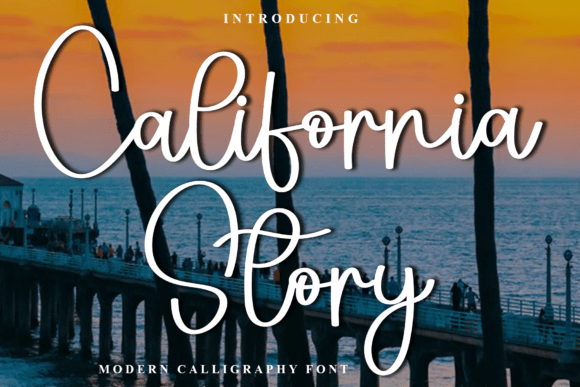
California Story belongs to the Script Amp category, known for its fluid, handwritten feel. However, not all script fonts are created equal. Some are too messy to read, while others feel stiff and outdated. California Story strikes a balance between artistic flair and legibility. It has a relaxed, coastal vibe that feels approachable yet refined. This mood is perfect for brands that want to appear friendly and authentic without sacrificing professionalism.
The strokes are smooth and connected, giving it a natural flow that mimics genuine handwriting. This makes it an excellent choice for businesses that want to convey a personal touch. In a digital world filled with automated responses and generic templates, a handwritten font can make your customers feel like they are interacting with a real person. It adds humanity to your modern typography stack, softening the edges of corporate minimalism.
Real-World Applications for Entrepreneurs
So, how do you actually use this creative font in your daily operations? The key is to treat it as a display font. Script fonts are generally best used for headlines, logos, and short bursts of text rather than long paragraphs. Here are some practical ways to integrate California Story into your business materials:
- Logo Design: If you are launching a new brand or refreshing an old one, California Story can serve as the centerpiece of your logo. It works beautifully for beauty brands, florists, photographers, and lifestyle coaches. The elegance of the script conveys luxury and care.
- Packaging Design: Imagine a minimalist label on a jar of artisanal honey or a box of organic skincare. Using California Story for the product name adds a premium feel. It stands out against clean backgrounds and pairs well with simple iconography.
- Social Media Graphics: For Instagram posts or Pinterest pins, use this font for quote overlays or announcement headers. It catches the eye in a crowded feed. Just ensure the background contrast is high enough to maintain readability on small mobile screens.
- Customer-Facing Materials: Thank-you cards included in shipments are a powerful tool for retention. Writing "Thank You" or the customer’s name in California Story adds a personal, heartfelt touch that standard typed fonts cannot match. It turns a routine transaction into a memorable experience.
- Website Banners: Use it sparingly on your homepage hero section or for section dividers. It can highlight special offers or introduce your brand story with a bit of flair.
Pairing Fonts for Maximum Impact
One of the biggest mistakes beginners make is using a decorative script font for body text. It is hard to read and causes eye strain. To use California Story effectively, you must pair it with a complementary sans serif font or a clean serif font. The goal is contrast. Since California Story is expressive and flowing, your secondary font should be structured and neutral.
For example, if you are designing a café menu, use California Story for the category headers like "Pastries" or "Coffee." Then, use a simple, geometric sans serif for the item descriptions and prices. This hierarchy guides the reader’s eye and ensures that the important information is easy to digest. Similarly, for a business card, let the script font highlight your name or tagline, while a crisp sans serif handles your contact details. This combination looks polished and intentional.
Readability and Practical Testing
Before you roll out California Story across your entire web design or print campaign, test it in real-world scenarios. Print a sample label at the actual size you intend to use. Does the thin stroke hold up, or does it disappear? View your social media graphic on a phone screen from arm’s length. Is the text legible? Script fonts can sometimes lose clarity when scaled down too small.
If you find that certain letters connect in a way that reduces clarity, try adjusting the kerning or tracking in your design software. Sometimes, slightly increasing the space between characters can improve readability without losing the font’s charm. Remember, aesthetics should never completely override function. If your customers cannot read your message, the design has failed, no matter how beautiful the font pairing is.
Licensing and Professional Use
As an entrepreneur, you must always respect intellectual property. Before using California Story or any other commercial font in your business, check the licensing agreement. Most premium fonts require a specific commercial license if you are using them for products you sell, such as printed t-shirts, mugs, or physical packaging. Using a personal-use font for commercial purposes can lead to legal issues down the road.
Investing in the proper license is part of running a legitimate business. It ensures that you have the right to use these design assets in your marketing, client work, and merchandise. Think of it as buying the rights to use a stock photo or a music track. It protects your brand and supports the designers who create these tools.
In conclusion, California Story is more than just a pretty set of letters. It is a versatile tool that can elevate your brand’s perceived value. By using it strategically in your logos, packaging, and digital content, you create a cohesive and inviting brand experience. Take the time to experiment with pairings, test for readability, and ensure your licensing is correct. When done right, this script font can become a signature element of your business, helping you stand out in a competitive market with style and grace.